
user locations: pete_nice
city lights bookstore
from allen ginsberg, jack kerouac, the beats posted in literature by pete_nice
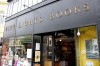
Founded as an all-paperback bookstore by Peter D. Martin in 1952, the name City Lights is an homage to the Charlie Chaplin film of the same name. Martin also used the name for a magazine he was publishing in San Francisco at the same time.
In 1953, the poet Lawrence Ferlinghetti was walking by the storefront and noticed Martin hanging up a sign. Ferlinghetti told Martin he had written for his magazine, and that he had always wanted to own a bookstore. They both invested $500 and became partners in the store.
In 1955, Ferlinghetti heard Allen Ginsberg reciting Howl at the Six Gallery and offered to publish it. The poem was published in 1956, and the resulting obscenity trial was not entirely unexpected given the prevailing attitude towards drug use and homosexuality at the time.
The presiding judge at the obscenity trial declared that Howl was not obscene and that a book with “the slightest redeeming social importance” was guaranteed First Amendment protection.
 view full location details...
the beat museum
from jack kerouac, allen ginsberg, the beats posted in literature by pete_nice
In 2003, the Ciminios transformed their bookstore into the Beat Museum. Three years later, they moved to this two-story location in North Beach.
The Beat Museum now features several donated artifacts of the Beat era and its characters: Jack Kerouac's jacket, Neal Cassidy's referee shirt from his Ken Kesey bus-driving days, the 1949 Hudson- the same make and model that was driven in On the Road- used in the film version of that book and donated by creators of the film.
In addition, the museum features more than 1,000 photos, rare books, paintings, records, and posters to show the Beats rejection of conformity, resistance to cold war mentality, and love of personal freedom.
 view full location details...
rinky dink ice cream parlor
from dick dale, surf rock posted in music by pete_nice
Dick Dale started performing with his guitar at the Rinky Dink Ice Cream Parlor at this corner beginning in 1959.
By 1961, the film Gidget had been released and sparked an interest in surfing culture. Dale had a large enough crowd to start playing the Rendezvous Ballroom, and his first big hit with the Del-Tones was "Let's Go Trippin'."
 view full location details...
rendezvous ballroom
from dick dale, surf music, big band posted in music by pete_nice
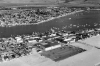
Built in 1928, the Rendezvous Ballroom was constructed on the Balboa peninsula in Orange County, CA.
Capitalizing on the popularity of swing and big band music, the ballroom featured numerous performers of that era: Artie Shaw, Ozzie Nelson, Benny Goodman, Guy Lombardo, Bob Crosby, Tommy Dorsey, Stan Kenton, and more.
In the early '60, Dick Dale was playing at an ice cream parlor in the area. He added members of a backing band to form the Del-Tones, and he played his first gig at the Rendezvous on July 1, 1961. Only 17 people showed up, most of them his surfer friends.
But Dale continued to play and within four months, thousands of people were attending nightly to see the band perform and dance "The Surfer Stomp." Several other bands formed as a result of these shows, and surf rock was born.
The Rendezvous Ballroom burnt down in 1966 (coincidentally, a band called the Cinderman played the night before). In 1986, the O.C. Historical Commission dedicated a plaque here.
 view full location details...
apollo theater
from ella fitzgerald, james brown posted in music by pete_nice
Built in 1913 at this location in the Harlem neighborhood of Manhattan, this theater changed hands several times until it was purchased, refurbished, and renamed the Apollo Theater by Frank Schulman in 1934.
Since the neighborhood had benefited from a large influx of African Americans during the Harlem Renaissance, Schulman wanted to make the theater exclusively black entertainment. He hired in-house producer Clarence Robinson, and the famous "audition night" was instituted.
In 1934, a seventeen-year-old Ella Fitzgerald won the $25 first prize for her vocal renditions of "Judy" (by Hoagy Carmichael) and "The Object of My Affection" (by Pinky Tomlin).
In 1962, James Brown recorded the album Live at the Apollo at the theater. The album was very popular (66 weeks on the Billboard charts), and led to 3 more James Brown live albums and a tv special at the Apollo.
 view full location details...