
user locations: pete_nice - literature
hotel ambos mundos
from ernest hemingway posted in literature by pete_nice
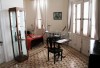
This 1920s hotel was frequented by Ernest Hemingway during the 1930s, while he wrote large portions of For Whom the Bell Tolls.
His room of choice, #511, is now a museum dedicated to the writer. Large black and white photographs of Hemingway adorn the hotel's lobby, and the rooftop restaurant serves a Hemingway Special (fish and rice).
 view full location details...
museo ernest hemingway
from ernest hemingway posted in literature by pete_nice
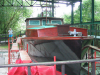
Finca Vigía (English translation- Lookout Farm) is where Ernest Hemingway made his occasional home from 1939 to 1960. At this location, he wrote seven books, including The Old Man and the Sea, A Moveable Feast and Islands in the Stream.
Today, Finca Vigía is the home of the Cuban Museo Ernest Hemingway. The walls are covered with his hunting trophies and his books still line the shelves, and his fishing boat is outside.
 view full location details...
the hemingway-pfeiffer museum
from ernest hemingway posted in literature by pete_nice
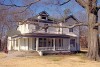
In 1927, Ernest Hemingway married Pauline Pfeiffer of Piggott, Arkansas. She was a graduate of the Missouri School of Journalism in 1918, and was working with the Paris Vogue magazine when they met at a party.
The couple was married from 1927-1940, and the Pfeiffer family financed much of Hemingway's writing career- purchasing the couple a car and a home in Florida.
Hemingway wrote much of A Farewell to Arms in the barn studio of this residence, and today it is a museum and educational center.
 view full location details...
hemingway bar, ritz hotel
from ernest hemingway posted in literature by pete_nice
Ernest "Pappa" Hemingway roamed the streets of Paris in the 1920s with other ex-pat writers like Gertrude Stein, F. Scott Fitzgerald, and Ford Maddox Ford- but he could only afford to drink at the Ritz Hotel on the Place Vendôme once a week. After a couple of best-sellers, he had a bit more spending money, but by that time the Germans had decided to borrow France for awhile.
Big Pappa didn't appreciate that, so when D-Day came he decided to play soldier as a war correspondent for Collier's magazine. By most accounts, he did a pretty good job- rounding up a gang of Resistance fighters and outfitting them, then drinking at cafés and wine cellars while dodging German snipers on the way to Paris. Their mission: to liberate the Ritz.
On August 25, 1944, while Gen. Jacques Leclerc's 2nd French Armored Division and a number of American units liberated Paris, Hemingway and his band of freedom fighters liberated the Ritz.
Read the article here.
 view full location details...
vesuvio cafe
from jack kerouac, allen ginsberg, the beats posted in literature by pete_nice
Founded in 1948 by Henri Lenoir, the Vesuvio Cafe became a popular hangout for Beat writers like Jack Kerouac and Neal Cassidy.
From the Vesuvio website:
"On October 17, 1955, Neal Cassady, the real life Dean Moriarty of the quintessential Beat classic On the Road, stopped at Vesuvio on the way to the now legendary Six Gallery for a poetry reading, and the place has never been the same. It became a regular hangout of Jack Kerouac and other famous Beat poets and has become ground zero for pilgrims on the Beat trail ever since."
 view full location details...