
user locations: pete_nice - history
22 gia long street
from fall of saigon, vietnam war posted in history by pete_nice
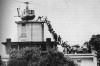
On April 30, 1975, North Vietnamese forces entered Saigon while U.S. government forces were evacuated.
Dutch photographer Hubert van Es, working for UPI, captured a defining image of that distinct point in the conflict, as Americans crowded the roof of this building to evacuate by helicopter.
As with the city's name (Saigon to Ho Chi Minh City), the street name was also changed to Lý Tá»± Trá»ng Street, in honor of a 17-year-old communist executed by the French. Today, the building still stands, but the roof is off-limits.
 view full location details...
exxon valdez oil spill
from environmental disasters, green movement posted in history by pete_nice
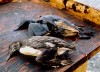
In the ensuing months, the media was awash with images of oil-covered wildlife, which briefly galvanized the public against environmental exploitation during the Exxon Valdez crisis.
This public relations mistake was later avoided in the Deepwater Horizon oil spill by using copious amounts carcinogenic dispersants before the oil could reach shore.
 view full location details...
exxon valdez oil spill
from environmental disasters, green movement posted in history by pete_nice
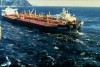
On March 24, 1989, the oil tanker Exxon Valdez struck Prince William Sound's Bligh Reef at 12:04 a.m. In the next few days, the damaged vessel spilled 260,000 to 750,000 barrels of crude oil into the sea and onto 1,300 miles of coastline. At the time, it was considered to be one of the most devastating corporate-caused oil spills ever.
The Valdez suffered from a number of technical failures (single-walled hull for the tanker, failed radar) and human errors prior to the accident. This included (but not limited to) the understaff and overwork of an exhausted sea crew- a practice that is still prevalent in the shipping industry today.
To combat the accumulation of crude oil on the seashore, a combination of high-pressure hoses and hot water were initially used, which cooked the microorganisms (plankton) that served as the base of the food chain in the ecosystem.
 view full location details...
lenny bruce’s home
from lenny bruce posted in history by pete_nice
Legendary comedian, social critic and free speech advocate Lenny Bruce lived at this home until his death here from morphine overdose on August 3, 1966. He was 40 years old.
Bruce's act had increasing challenged the limits of free speech, and he had been arrested for obscenity and banned in several cities for performing his act.
 view full location details...
chernobyl disaster
from nuclear disasters posted in history by pete_nice
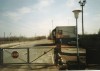
In northern Ukraine, near the border with Belarus, and adjacent to the former city of Pripyat, are the radioactive remnants of the Chernobyl Nuclear Power Plant.
On April 26, 1986, the #4 reactor had a catastrophic power increase that led to a series of explosions in its core. This dispersed large quantities of radioactive fuel and core materials into the atmosphere, and led to the worst nuclear disaster in history. Chernobyl is one of only two Level 7 events (the maximum rating) on the International Nuclear Event Scale- the other is Fukushima.
While managing the crisis of the Chernobyl meltdown, the #4 reactor was quickly coated with layers of concrete to form "the sarcophagus," a physical barrier to help protect workers against radiation. Even today, radiation levels are so high that the workers responsible for rebuilding the sarcophagus are only allowed to work five hours a day for one month before taking 15 days of rest.
Today, the area 19 miles in all directions is considered the "Chernobyl Exclusion Zone" and will not be habitable for 20,000 years.
 view full location details...